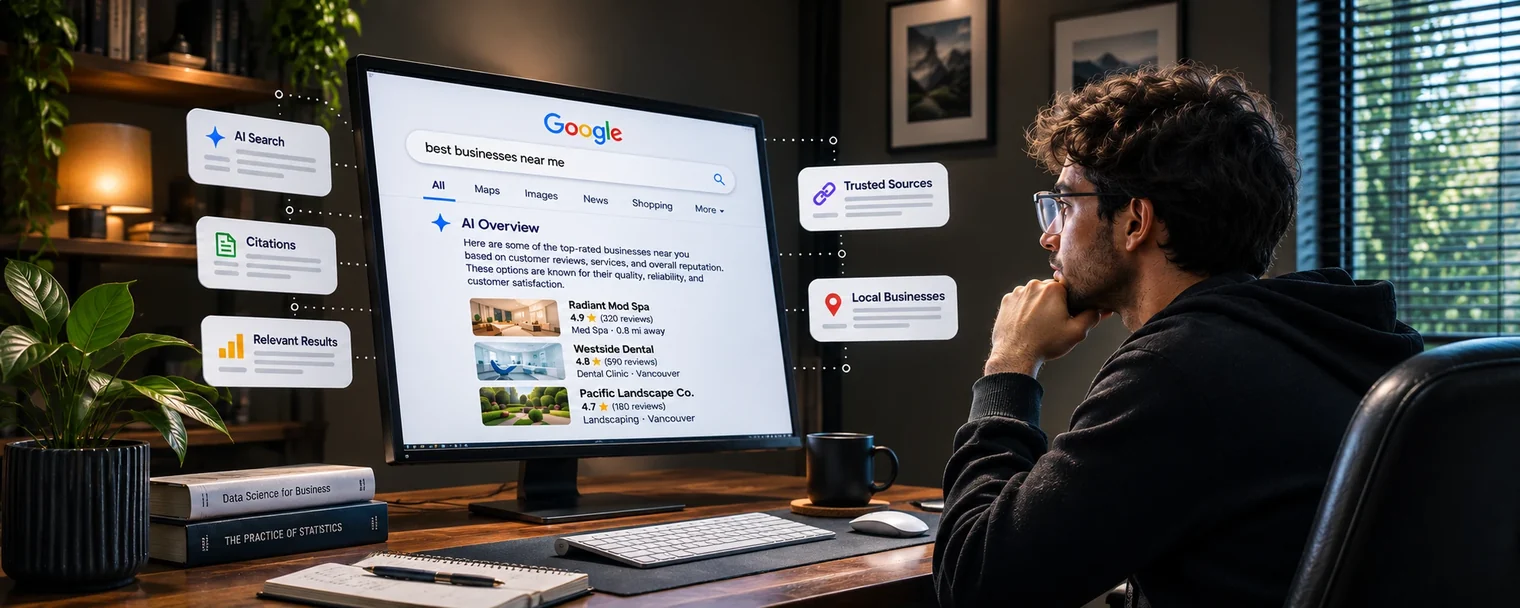
On 15 May 2026, Google released an official guide explaining how businesses can improve their visibility in AI-powered search, including AI Overviews and AI Mode. Some of its recommendations might surprise you.
For years, businesses have focused on getting their websites to rank higher on Google. But search is changing.
Instead of searching for "best med spa in Vancouver" and scrolling through websites, someone can now ask: "Which med spas in Vancouver offer laser skin rejuvenation, have experienced practitioners, and are highly rated?"
AI can generate an answer, compare options, and recommend websites worth visiting. Your next customer might discover your business through an AI-generated answer before ever scrolling through traditional search results.
But is your website actually prepared for that?
I recently built a free tool that checks whether your website has technical issues that could affect AI discoverability. You can check your website for free, with no signup required for the initial check.
Now, let's break down what Google is recommending and what it means for your business.
1. Google wants better content, not more content
One of Google's biggest recommendations is to focus on original, genuinely useful content. That means publishing dozens of generic AI-generated blog posts probably isn't the strategy you think it is.
Imagine you own a dental clinic. Your website has a page titled "What Are Dental Implants?" That's helpful, but hundreds of websites already explain the same thing.
Now imagine your website answers:
- How much do dental implants cost in Vancouver?
- Are implants better than bridges?
- What should I expect during recovery?
- How long does the entire process take?
These are questions potential customers ask before making a purchasing decision. Google's guidance emphasises unique content that provides real value, especially as people use longer, more specific questions in AI search. (Google for Developers)
The opportunity isn't to publish more content than everyone else. It's to answer your customers' questions better than everyone else.
2. Your website needs to be easy for search engines to understand
Your website might look incredible. Beautiful animations. Professional photography. Expensive branding. But if search engines can't properly access or understand your content, you could be hurting your visibility.
Google recommends making sure your website:
- Allows search engines to crawl important pages
- Has clear navigation and internal links
- Makes important information accessible as text
- Uses structured data that accurately represents the content
- Gives people a good experience on the page, on any device
Here's an example. Imagine a landscaping company with a beautiful website showcasing incredible projects. But there's one problem: the website barely explains its services. There's no dedicated page for retaining walls, drainage solutions, outdoor lighting, or landscape design.
How is a search engine supposed to confidently understand everything the company offers?
Good design gets people's attention. Good website structure helps search engines understand your business. You need both.
3. Technical SEO still matters in AI search
Here's something interesting. Google specifically says that traditional SEO fundamentals remain relevant to AI Overviews and AI Mode. In fact, Google states that there are "no additional requirements to appear in AI Overviews or AI Mode, nor other special optimizations necessary." (Google for Developers)
That means things like crawlability, indexability, page structure, and helpful content still matter. And this is where many businesses run into problems.
Your website could have technical issues you don't even know about. For example, your robots.txt file might restrict certain crawlers, or important information might be difficult to access because of how your website renders content.
These issues don't automatically prevent you from appearing in every AI search platform, but they're worth investigating.
Here's a free way to check your website. I built an AI Citation Check through Elevate Digital Marketing to help business owners identify potential technical barriers to AI discovery. The tool checks six areas of your website:
- AI crawler access
- Structured data
- Page structure
- JavaScript rendering
- XML sitemaps
- AI-related site configuration
You'll receive an initial assessment highlighting potential issues and areas worth improving. Run your free AI Citation Check.
It doesn't guarantee you'll appear in ChatGPT, Gemini, or Google's AI results. No legitimate tool can promise that. But it can help you identify technical problems that may be limiting how easily AI systems access and interpret your website.
4. Stop chasing AI SEO hacks
You've probably noticed new marketing terms appearing everywhere. GEO. AEO. AI SEO. And now there are companies promising to get your business recommended by ChatGPT.
Some AI visibility strategies are genuinely useful. But be careful with anyone promising guaranteed results.
Google's official guidance specifically addresses misconceptions surrounding AI optimisation. For example, you don't need a special llms.txt file to appear in Google's AI search features. You also don't need to build a separate website specifically for AI. Google's documentation is explicit that no new machine-readable files, AI text files, markup or special schema.org structured data are required. (Google for Developers)
Google's message is straightforward. The fundamentals of good SEO haven't disappeared just because AI entered the conversation.
Before spending thousands of dollars on another optimisation strategy, make sure your existing website is doing the basics correctly.
5. Answer questions people ask before spending money
This is probably the biggest opportunity I see for small businesses. Most websites explain what a business does. Far fewer answer the questions customers ask before choosing that business.
Imagine you own a roofing company. Your website has pages for Roofing Services, About Us, and Contact. Nothing wrong with that. But what if you also answered:
- How much does a roof replacement cost in Vancouver?
- Metal roofing vs asphalt shingles: which lasts longer?
- How do I know whether my roof needs repairs or replacement?
These questions are specific, useful, and often come from people researching a purchase. They're also the kinds of detailed questions people increasingly ask AI tools.
Think about your own business. What are the five questions customers ask most often before hiring you? Start answering those questions on your website. Provide actual information, examples, pricing factors, and explanations that help people make informed decisions.
Don't just tell people what you sell. Help them understand why they might need it.
What this means for business owners
I build websites and help businesses improve their online visibility, and one thing I've noticed is how much attention goes into design compared with discoverability. Business owners invest thousands of dollars making their websites look beautiful. But how often do they ask whether potential customers can actually find them?
AI search makes that question even more important.
Google's guidance doesn't mean traditional SEO is dead. It means the same fundamentals that help search engines understand your website remain important as search evolves. And there's an opportunity for smaller businesses willing to create useful content, explain their services clearly, and address technical issues.
Your next customer might not search for your business the way they did five years ago. They might simply ask AI which company they should hire. The question is whether your business will be among the options they discover.
If you're curious about your website's technical readiness for AI search, you can run my free AI Citation Check.
Official Google sources
- Google's new guide to generative AI search optimization, 15 May 2026
- Google: AI features and your website
- Google: top ways to succeed in AI search
Check your site against all of it at once
An AI readiness score, the crawlers you allow or block, and whether ChatGPT, Claude and Gemini actually name you.
Start my free trial